Expert Litigation Across Civil, Criminal & Commercial Law
Strategic Legal Solutions Backed by 20+ Years of Experience
Comprehensive Legal Support for Individuals & Corporates
Client-Centric Representation with Proven Results
Delhi High Court: Aadhaar Sufficient to Determine Age in POCSO Bail Case
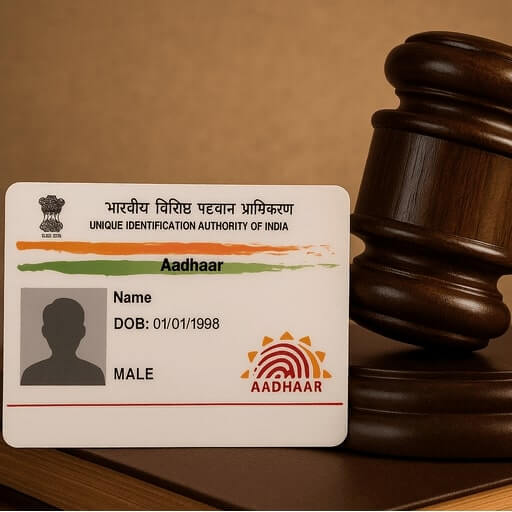
In a recent judgment, the Delhi High Court held that it is not mandatory to verify a girl’s age through school records before engaging in a consensual relationship. In Hanzla Iqbal v. State, the Court ruled that an Aadhaar card showing the prosecutrix as an adult is sufficient to negate charges under the POCSO Act. This decision sheds light on how courts assess age verification and consent in sexual offence cases.
Key Legal Issue
The central issue before the Delhi High Court was whether an accused must verify a girl’s age through school records before a consensual relationship. The Court clarified that if the prosecutrix holds a valid Aadhaar card showing she is above 18, it is reasonable for the accused to believe she is an adult. This has significant implications for bail and prosecution under the POCSO Act.
Court’s Observations
The Delhi High Court noted that the prosecutrix’s Aadhaar card listed her date of birth as January 1, 1998, making her a legal adult at the time of the relationship. The Court observed that the long-standing relationship and financial transactions suggested possible ulterior motives, including a honey trap. It held that POCSO charges were not prima facie made out based solely on conflicting age claims.
Further Investigation Ordered
The Delhi High Court directed the Commissioner of Police to conduct a detailed inquiry into the prosecutrix. The Court asked whether she had filed similar FIRs against others and noted suspicious financial transfers in her favor. This raised concerns of blackmail or entrapment, reinforcing the need for deeper investigation beyond age verification.
Legal Significance of the Judgment
This judgment clarifies that Aadhaar can be a valid proof of age in POCSO cases, reducing reliance on school records. It reinforces the principle that an accused’s reasonable belief, based on official documents, holds legal weight. The ruling sets an important precedent for bail decisions and age verification in consensual relationship cases.
Conclusion
The Delhi High Court’s ruling in Hanzla Iqbal v. State marks a key shift in how age is verified in POCSO cases. By accepting Aadhaar as sufficient proof, the Court emphasized practicality and fairness in assessing consensual relationships. This judgment may guide future cases involving age disputes and false accusations under the POCSO Act.